



The Secret That Turned Roger Federer's Career Around
The shift that transformed Federer from talented player to the greatest of all time was not technical — it was a fundamental change in his mental approach to competition.
Read Full Article →
The shift that transformed Federer from talented player to the greatest of all time was not technical — it was a fundamental change in his mental approach to competition.
Read Full Article →
Mental strength in tennis is not about gritting your teeth — it is a specific set of subconscious skills that the best players have trained and that any player can develop.
Read Full Article →
Visualization is one of the most powerful mental tools available to tennis players — and most players are using it wrong or not using it at all.
Read Full Article →
Every opponent you face on court has vulnerabilities they are hoping you never discover — and most of them are mental rather than technical.
Read Full Article →
Attitude on court is not just about sportsmanship — it is a direct performance variable that shapes every point you play and every decision you make under pressure.
Read Full Article →
The ability to win matches you have no right winning is the clearest measure of mental strength in tennis — and it is entirely trainable.
Read Full Article →
Your body language between points communicates directly to your subconscious — and it tells your opponent everything they need to know about your mental state.
Read Full Article →
The mental techniques that separate winning players from losing ones are specific, learnable, and almost never covered in standard tennis coaching.
Read Full Article →
The ability to compete relentlessly when your game is off is one of the most valuable and most trainable qualities in competitive tennis.
Read Full Article →
Every player has sessions where the ball is not landing right — the players who still find a way to win are the ones who have trained their mental game alongside their technical one.
Read Full Article →
Self-talk on a tennis court never stops — the question is whether yours is building your performance or quietly destroying it point by point.
Read Full Article →
The zone in tennis is not a random event that happens to some players — it is a specific neurological state that can be deliberately trained and consistently accessed.
Read Full Article →
Body language in tennis is not just presentation — it is a direct line of communication to your own subconscious that shapes your performance on every point.
Read Full Article →
Rafael Nadal's dominance was never just about physical intensity — it was built on a specific mental architecture that any serious player can study and apply.
Read Full Article →
Belief in tennis is not something you either have or do not have — it is a momentum-based psychological state that can be deliberately built shot by shot and point by point.
Read Full Article →
Every successful tennis player operates from a mental formula — a consistent set of inner conditions that produce their best performances — and great coaches help their players build it deliberately.
Read Full Article →
Momentum in tennis is not luck — it is a psychological state that can be created, protected, and recovered through specific mental skills that most players never deliberately train.
Read Full Article →
Practice is not just where you develop your technical game — it is where your mental game is built or neglected, and most players leave enormous mental potential on the practice court.
Read Full Article →
The greatest players in tennis history share mental qualities that are hiding in plain sight — and extracting those lessons is one of the fastest routes to developing your own mental game.
Read Full Article →
Getting into the zone in tennis is not about trying harder — it is about creating the specific inner conditions that allow your subconscious to take over and perform at its peak.
Read Full Article →
Big matches expose the mental game like nothing else in tennis — and the players who consistently perform on the biggest occasions have trained for exactly this, not just hoped for it.
Read Full Article →
Novak Djokovic's rise to world number one was as much a mental transformation as a physical one — and the specific shifts he made are a masterclass in subconscious performance development.
Read Full Article →
At every level above beginner, the player with the stronger mental game wins more often than the player with the better technique — and that mental strength is entirely trainable.
Read Full Article →
Intimidation by a talented opponent is a subconscious response, not an honest assessment — and players who learn to eliminate it compete at a completely different level.
Read Full Article →
Playing a higher-ranked opponent does not have to mean playing with the hand brake on — the players who cause upsets have learned to compete from a completely different subconscious position.
Read Full Article →
The gap between practice performance and tournament performance is one of the most common and most solvable frustrations in tennis — and the answer is almost never technical.
Read Full Article →
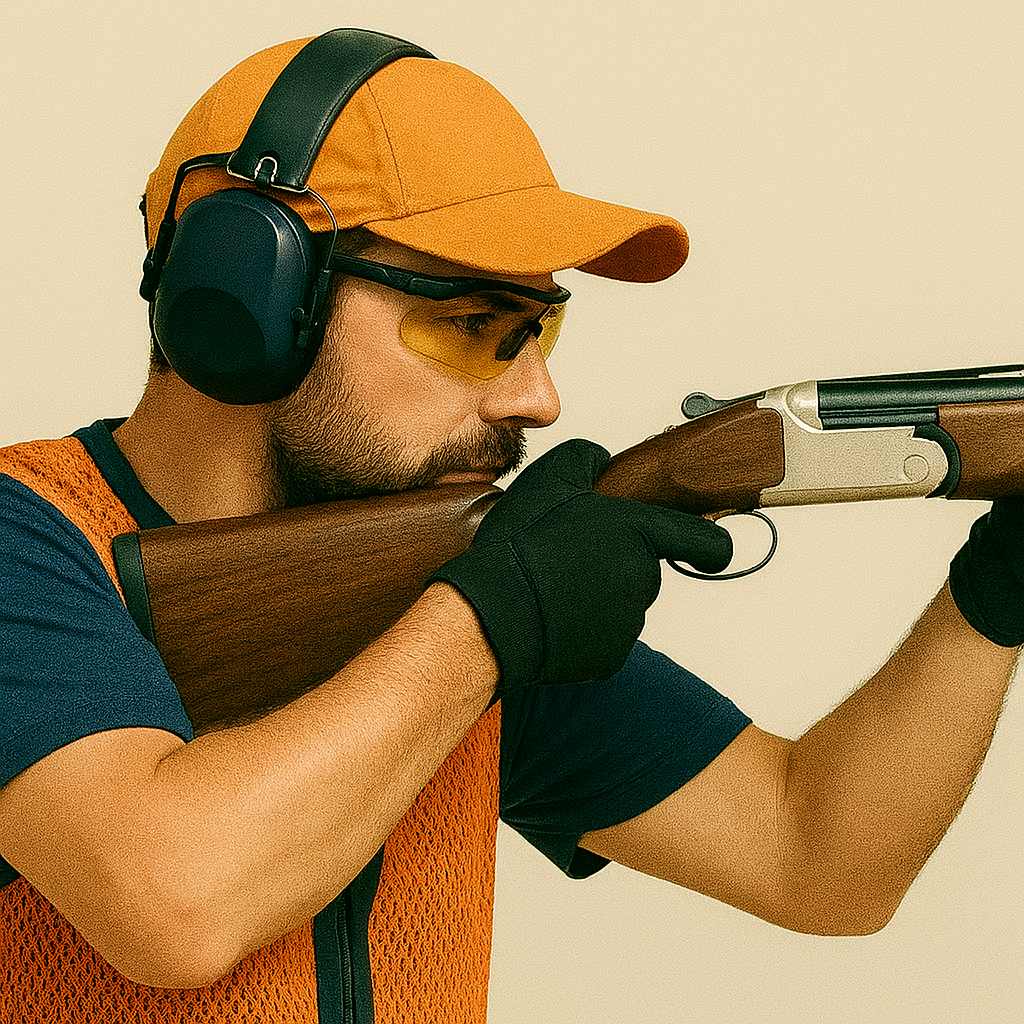
In trap shooting, effortful focus can interfere with subconscious timing, making relaxed awareness more effective than intense concentration.
Read Full Article →
Elite trap shooters rely on consistent pre-shot routines to stabilize subconscious timing, reduce interference, and protect flow under pressure.
Read Full Article →
Hesitation and conscious analysis disrupt subconscious timing in trap shooting, quietly undermining consistency even when technique looks sound.
Read Full Article →
Trap shooting consistency depends on subconscious timing and pattern recognition, not conscious attention to stance and positioning.
Read Full Article →
In precision shooting, the final second before firing often triggers subconscious interference, making it the most fragile moment for accuracy and consistency.
Read Full Article →
Elite marksmen achieve consistency by training mental trust, pressure tolerance, and subconscious execution alongside technical precision.
Read Full Article →
Precision shooting magnifies nervous system disruption, making competition nerves more damaging than in most sports that rely on gross motor skills.
Read Full Article →
Conscious breathing control disrupts subconscious coordination in target shooting, undermining the stillness and timing precision requires.
Read Full Article →
Precision target shooting depends on mental stillness, a subconscious state where control fades and execution flows without interference.
Read Full Article →
Sustained focus in table tennis comes from nervous system regulation, clean resets between points, and subconscious trust rather than effortful concentration.
Read Full Article →
Overthinking in table tennis pulls control away from subconscious timing and perception, quietly costing players matches they have the skill to win.
Read Full Article →
A practical mental reset routine that helps serious table tennis players recover faster between points and protect focus, perception, and reaction time.
Read Full Article →
Competition anxiety disrupts subconscious processing in table tennis, slowing reaction time through tension, hesitation, and conscious interference.
Read Full Article →
Elite table tennis players operate from a subconscious mental state that allows calm perception, effortless timing, and rapid recovery under pressure.
Read Full Article →
Elite table tennis performance depends less on raw speed and more on subconscious pattern recognition, trust, and early perception under pressure.
Read Full Article →


Pressure at the pool table subtly disrupts rhythm, stroke trust, and decision-making. This article explains how pressure changes your game and how consistent players prevent it from taking over.
Read Full Article →
Overthinking shot selection in pool disrupts decision rhythm, stroke flow, and confidence. This article explains why excessive thinking costs frames and how to restore automatic play.
Read Full Article →
True consistency in pool does not come from confidence or talent, but from a subconscious routine that stabilizes pace, perception, and execution under pressure.
Read Full Article →

Deciding frames expose subconscious pressure, not technical flaws. This article explains why pool players tighten up and how elite performers stay calm when the match is on the line.
Read Full Article →
Fear of big hits in American football is not a toughness issue, but a subconscious safety response that disrupts reaction time, commitment, and confidence under contact.
Read Full Article →
Fear of contact in football is a subconscious protection pattern, not a character flaw. Here is what drives it, why willpower alone never resolves it, and how to address it at the level where it actually lives.
Read Full Article →
Players who make no unforced errors win matches by increasing internal pressure. This article explains why they are so difficult and how to respond without frustration or over-pressing.
Read Full Article →
Double fault anxiety in tennis is not a technical serving flaw, but a subconscious reaction to perceived responsibility that disrupts commitment under pressure.
Read Full Article →

Mental preparation for dance auditions is not about hype or suppressing nerves, but about regulating the nervous system so performance stays expressive under pressure.
Read Full Article →

Many dancers lose flow after small mistakes not because of skill gaps, but because subconscious self-monitoring interrupts rhythm and expression during performance.
Read Full Article →
Stage presence in competitive dance is not a personality trait, but a nervous system state. Learn how elite dancers stay grounded, expressive, and powerful under pressure.
Read Full Article →

Many dancers choke under pressure not due to weak mindset, but because subconscious threat responses interfere with movement, timing, and expression during performance.
Read Full Article →
Many swimmers over-force the opening of races not from excitement, but because subconscious urgency disrupts rhythm and timing in the first 50 metres.
Read Full Article →
Many swimmers abandon race strategy under pressure not due to poor planning, but because subconscious threat responses override execution during competition.
Read Full Article →
Many swimmers struggle with pacing in the middle of races not due to fitness, but because subconscious pressure disrupts rhythm and regulation under competition stress.
Read Full Article →
Many swimmers lose speed at the wall not because of conditioning or technique, but because subconscious pressure disrupts timing and commitment during turns.
Read Full Article →
Overthinking sprint technique mid-race disrupts flow, timing, and power. This article explains why conscious control breaks automatic speed and how elite sprinters stay locked into effortless performance.
Read Full Article →
False start fear in sprinting is not a discipline issue but a subconscious conflict between explosiveness and inhibition. Learn why it happens and how elite sprinters stay explosive without hesitation.
Read Full Article →
Race anxiety peaks at the start line not because athletes are unprepared, but because the subconscious interprets pressure as threat. This article explains why it happens and how elite athletes stay calm under pressure.
Read Full Article →

Momentum in basketball is not a metaphor — it is a measurable psychological cascade. Here is what causes games to flip, why the slide feels impossible to stop, and how great teams build the resilience to arrest it.
Read Full Article →
Crowd noise directly alters the neurological state that basketball decision-making depends on. Here is what it actually does to players — and how the best ones build subconscious immunity to it.
Read Full Article →
Focus in motorsport is not concentration — it is the quality of present-moment absorption that keeps the subconscious driving process running without interference. Here is how to build it deliberately.
Read Full Article →
How a driver responds in the seconds after a mistake determines far more of the race result than the mistake itself. Here is the mental process behind fast, clean mid-race recovery.
Read Full Article →
Staying calm under race pressure is not a personality trait — it is a trained subconscious state. Here is what produces it, what prevents it, and how to build it deliberately.
Read Full Article →
Reaction time in motorsport is not about thinking faster — it is about removing conscious thought from the process entirely. Here is the neuroscience behind elite reaction speed and how to genuinely train it.
Read Full Article →
Missing easy chances is almost never a technical problem. Here is what is actually happening in the striker's mind at the moment of execution — and how the best finishers consistently build the mental state that converts them.
Read Full Article →
Penalty kicks are decided in the mind long before the foot strikes the ball. Here is the exact subconscious sequence that produces penalty anxiety — and how to build the composure that changes everything.
Read Full Article →
Wrestling fatigue is not just physical. When the gas tank empties under competition pressure the mind goes with it — and that mental collapse costs far more than the physical tiredness alone ever would.
Read Full Article →
Fear of contact in wrestling is more common than most wrestlers admit and more resolvable than most coaches explain. Here is what drives it subconsciously and how to transform hesitation into committed, aggressive control.
Read Full Article →
The mass start combines several of the most powerful open water anxiety triggers into a single unavoidable moment. Here is what makes it so overwhelming — and how to build the subconscious composure that makes it simply the beginning of a race.
Read Full Article →
Breathing that is automatic in the pool can completely fall apart in open water. Here is the neurological reason why — and how to rebuild a breathing response that holds under real open water conditions.
Read Full Article →
For many swimmers, losing sight of the bottom triggers immediate anxiety that has nothing to do with actual danger. Here is what is driving it at the subconscious level — and how to genuinely resolve it.
Read Full Article →
Open water panic is one of the most common and least discussed experiences in swimming. Here is the neurological mechanism behind it, why telling yourself to calm down does not work, and what actually does.
Read Full Article →
Pool swimmers moving to open water almost universally find it harder than their fitness should explain. Here is the real reason — a subconscious processing load that pool training was never designed to prepare you for.
Read Full Article →
Cold, pain, fear, and mental fatigue make open water swimming one of the most mentally demanding sports there is. Here is how deliberate mental training changes the subconscious relationship with every one of those challenges.
Read Full Article →
In precision sports the gap between practice and competition performance is one of the most consistent frustrations there is. Here is the exact neurological reason it happens — and how to close it.
Read Full Article →
Most dancers who struggle with performance anxiety assume they need more rehearsal. Here is why the anxiety has almost nothing to do with the choreography — and what it is actually about.
Read Full Article →
The fastest lap times in motor racing come from the quietest minds. Here is the neuroscience behind why mental calm produces physical speed — and how to develop the subconscious state that delivers it.
Read Full Article →
Pool performance is controlled by the subconscious, not mechanics alone. Discover why pressure exposes mental training gaps and how elite players stay consistent.
Read Full Article →
Gymnastics fear isn't irrational — it's a precise psychological response. Here's what's really happening in your brain and how to work with it rather than against it.
Read Full Article →
A gymnastics mental block isn't a lack of courage — it's your brain doing exactly what it was designed to do. Here's the neuroscience behind it and how to break through.
Read Full Article →
A gymnastics mental block can stop even the most talented athlete cold. Here's how to rebuild confidence and find your way back to the skills you love.
Read Full Article →
You've done it a thousand times. But suddenly your mind won't let you. Here's what's happening in your brain and how to find your way back to the skill.
Read Full Article →
You train hard but underperform when it counts. The gap isn't physical — it's a subconscious disconnect that hypnosis and mental training can close.
Read Full Article →
Choking is not a mental weakness. It is a specific neurological event — and understanding exactly what causes it is the first step to eliminating it permanently.
Read Full Article →
The yips are not a technical problem. They are a subconscious interference pattern — and the hypnotic approach addresses the neurological source rather than the symptoms.
Read Full Article →
Overtraining syndrome is not simply training too much — it is training more than you are recovering from, driven in most cases by subconscious programs that make rest feel dangerous, more always feel necessary, and stopping feel like falling behind.
Read Full Article →
Track and field strips performance to its most exposed form — no team, no equipment advantage, just you, your training, and whatever is happening in your mind between the gun and the finish line.
Read Full Article →
The ocean decides what waves are available. The surfer's mind decides what is done with them — in a fraction of a second, subconsciously, through the mental game they have built.
Read Full Article →
Technical skill and conditioning are the entry requirements. The mental game — composure under fire, courage when hurt, tactical clarity through twelve rounds — is what determines who wins.
Read Full Article →
Every wrestler who has ever competed knows the feeling — standing across from an opponent and sensing how this match is going to go. That feeling is not instinct. It is subconscious programming at work — and it is entirely trainable.
Read Full Article →
The final period of a hard wrestling match is not decided by who is fitter — it is decided by who has trained their subconscious to keep going when every physical signal is telling them to stop.
Read Full Article →
The scramble is where matches are won and lost — and the wrestler who stays mentally clear when everything is moving fast has an advantage that technique alone cannot provide.
Read Full Article →
Being taken down is not the problem. What your subconscious does in the three seconds after the takedown — that is where the match is won or lost, and that response is entirely trainable.
Read Full Article →
The most dangerous wrestler on the mat is not the most aggressive one — it is the one whose aggression stays controlled, directed, and purposeful when the pressure is at its highest.
Read Full Article →
Close wrestling matches are not decided by who is better — they are decided by who is more mentally prepared for exactly this situation, and that preparation is entirely a matter of deliberate subconscious training.
Read Full Article →
Quarterback decision-making under pressure is not a talent reserved for the elite — it is a trained subconscious skill built through pattern recognition, mental rehearsal, and the deliberate conditioning of the decisive confidence that great quarterbacks carry into every snap.
Read Full Article →
Short memory in football is not about caring less — it is about a trained subconscious that processes adversity quickly, releases it completely, and arrives at the next play with full capacity intact.
Read Full Article →
Fear of contact in football is not weakness — it is a subconscious protection response that was never designed for the game, and with the right training it can be completely retrained so you play with full commitment on every snap.
Read Full Article →
Football does not ask for sustained focus — it asks for something harder: the ability to switch fully on, fully off, and fully on again, dozens of times per game, without losing sharpness at either end of the transition.
Read Full Article →
The most decisive conversations in a football game are not the ones in the huddle — they are the ones happening subconsciously between eleven players whose collective belief either holds or fractures when the game gets hard.
Read Full Article →
Controlled aggression in boxing is the ability to maintain technical structure and decision clarity while increasing intensity under pressure.
Read Full Article →
Pre-fight fear in boxing is not a weakness but a physiological activation state that can be trained into focused performance energy through subconscious conditioning.
Read Full Article →
The corner break in boxing is a critical nervous system reset window that allows fighters to clear mental residue and restore access to automatic performance under pressure.
Read Full Article →

How boxers develop subconscious confidence and emotional recovery ability after taking hard shots in the ring.
Read Full Article →
Staying composed in boxing is not about calmness but about maintaining subconscious access to trained responses while under pressure and physical threat.
Read Full Article →
The fighters who feel faster are not thinking faster — they are thinking less. Presence is not something you force in combat, it is something your subconscious must be trained to deliver when pressure is at its highest.
Read Full Article →
The fastest reactions in combat do not come from thinking faster, but from removing the delay between perception and action. Instinct is not natural, it is trained at the subconscious level.
Read Full Article →
Adrenaline is not a problem to remove, it is a system to learn how to regulate and use as performance fuel under pressure.
Read Full Article →

Facing stronger opponents is not about trying harder but about retraining your subconscious to remove hesitation and access your full ability under pressure.
Read Full Article →

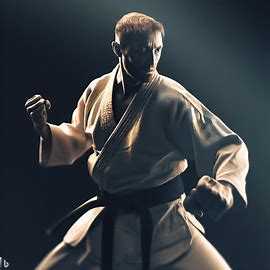
Instinct in martial arts is developed by removing the delay between perception and action through subconscious conditioning until response becomes automatic and immediate.
Read Full Article →
Athletes often perform better in training than competition due to subconscious threat responses and identity pressure, not lack of skill.
Read Full Article →
The mound is the most psychologically exposed position in team sport — and the pitcher who controls their mind controls the game, regardless of what the scoreboard says.
Read Full Article →
A batting slump is not a mechanical problem wearing a mechanical disguise — it is a subconscious pattern that has taken hold of your game, and the way out is not through the cage but through the mind.
Read Full Article →
The difference between a clutch hitter and one who struggles under pressure is not talent, not technique, and not experience — it is what the subconscious has been trained to do when everything is on the line.
Read Full Article →
Every other sport forces your mind forward. Baseball gives it time to wander — and the player who learns to control that idle time has a mental advantage that accumulates across every inning of every game.
Read Full Article →
Clutch performance in baseball is not a gift, not a personality trait, and not reserved for players with a particular kind of toughness — it is a specific subconscious response pattern that can be deliberately built.
Read Full Article →
Physical preparation is the ticket to the field. The mental game determines performance once you are there — in the fourth quarter, after the turnover, under 80,000 people and a scoreboard that does not lie.
Read Full Article →
A slump is not bad luck. It is a specific neurological feedback loop that training harder and analysing more typically makes worse rather than better.
Read Full Article →
Baseball gives the mind more time to interfere than almost any other sport. The mental game is not a supplement to baseball preparation — it is the primary differentiator at every level above recreational.
Read Full Article →
Technical ability and fitness determine your ceiling as a player. The mental game determines how consistently you reach it — in training, in big matches, under penalty shootout pressure, and in the moments that define careers.
Read Full Article →
Your fitness determines what is physically possible. Your mental game determines how much of that you actually access — in training, in races, and in the moments when everything in you is telling you to slow down.
Read Full Article →
Technical skill and conditioning determine what you are capable of. The mental game determines what you actually produce when the pressure is real, the opponent is dangerous, and the outcome matters.
Read Full Article →
Cricket gives the mind more time and more opportunity to interfere than almost any other sport — the mental game is the difference between what a player does in training and what they produce when it counts.
Read Full Article →
Stroke mechanics and fitness determine your ceiling as a swimmer — but the mental game determines how consistently you reach it when the competition is closest and the pressure is highest.
Read Full Article →
Every golfer hits bad shots. What separates the ones who recover from the ones who unravel is not talent or experience — it is what happens in the forty-five seconds after the ball lands, and that response is entirely trainable.
Read Full Article →
Sleep is not passive recovery — it is the most neurologically active period of the athletic cycle, when motor skills consolidate, reaction time restores, and the competitive mental edge is either built or degraded.
Read Full Article →
Clutch performance is not about luck. It is a combination of mental skill, preparation, and the ability to manage pressure...
Read Full Article →
When a mistake occurs, it triggers physical and mental reactions. Your heart may race, your muscles may tighten, and your mind can start replaying the error...
Read Full Article →
When you relax, your muscles move fluidly, your brain processes information quickly, and your decisions come naturally...
Read Full Article →
Almost every athlete I’ve worked with has struggled at some point with confidence, pressure, doubt, focus, or fear of failure..
Read Full Article →
You’ve seen it a thousand times. A player hits a blistering forehand winner, screams "Come on!", and then proceeds to dump three straight unforced errors into the bottom of the net...
Read Full Article →
The match isn/t over. Here/s how to get your mind back on your side — right now...
Read Full Article →
One of the most frustrating experiences in tennis is getting close to winning… and not being able to finish..
Read Full Article →
Mental toughness is not something you are born with. It is a skill — and like all skills, it can be trained.
Read Full Article →
The fastest decision-makers in basketball are not thinking faster — their subconscious has been trained to read the game at a level conscious thought cannot reach, and that training is entirely deliberate.
Read Full Article →
Missing shots is part of basketball. Letting a miss change how you shoot the next one is the part that is entirely within your control — and it is driven entirely by subconscious patterns that can be trained.
Read Full Article →
When the game accelerates and the pressure rises, composure is not a personality trait you either have or do not have — it is a trained subconscious response that every basketball player can develop with the right kind of work.
Read Full Article →
Fear in basketball is not cowardice and it is not weakness — it is a subconscious protection response that was never designed for a basketball court, and with the right training it can be completely retrained.
Read Full Article →
Every elite performer gets nervous. The ones who win have learned what to do with it.
Read Full Article →
Your putting stroke does not fall apart under pressure because your technique fails — it falls apart because your subconscious mind takes over. Understanding that distinction changes everything about how you train for it.
Read Full Article →
Why losing focus is not a weakness — but a natural pattern you can train your mind to overcome
Read Full Article →
Why focusing on your score is holding you back — and how to release it
Read Full Article →
Why your first shot is not about technique, but about what is happening beneath the surface
Read Full Article →
A slump is not a skill problem. It is a subconscious pattern — the brain running the wrong program at the wrong time.
Read Full Article →
Mental rehearsal is not a motivational trick. It produces measurable changes in the brain's motor circuits.
Read Full Article →
Everything clicks. Movement is effortless. Decisions happen before you've consciously made them.
Read Full Article →
When you are relaxed and confident, your body moves freely. Muscle memory kicks in. The swing flows.
Read Full Article →
Pre-game nerves are your body's natural response to a high-stakes situation.
Read Full Article →
Elite athletes know the mind controls the body. Learn how to enter the zone.
Read Full Article →
The mind is what separates winners from the rest on the golf course.
Read Full Article →
Mental toughness separates the winners from the rest during competition.
Read Full Article →
Harness the power of your subconscious for autopilot performance.
Read Full Article →
Mental training has exploded in soccer as the secret weapon.
Read Full Article →
Get the extra edge mental training provides in competitive swimming.
Read Full Article →
Running is just you out there — your body and your thoughts.
Read Full Article →
Speed and instinctive movements controlled by the subconscious mind.
Read Full Article →
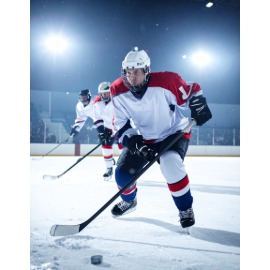
Play instinctively on the ice rather than manually planning every move.
Read Full Article →
Handle pressure, visualize success, maintain positive mindset.
Read Full Article →
Overcome fear of tumbling by addressing the subconscious mind.
Read Full Article →
Restore focus, composure, and consistent performance on the field.
Read Full Article →
Steady hand, sharp eye, deep focus, and calm mind under pressure.
Read Full Article →

Mental strength is crucial to training, belief, and overcoming intimidation.
Read Full Article →
Add mental techniques used by the greatest champions to your arsenal.
Read Full Article →
Handle contest pressures with confidence on the waves.
Read Full Article →
Quiet deep focus and positive mental attitude for the table.
Read Full Article →

Mental techniques massively increase the quality of routines and performances.
Read Full Article →

Harness autopilot muscle memory responses for rapid movements.
Read Full Article →
Develop mental resilience and maintain focus under pressure.
Read Full Article →For Targeted Articles & Info on a Full Range of Topics, see our Complete Indexes for: