




No sport has documented the mental game's importance more extensively than baseball, and no sport has created a richer vocabulary for describing its failures - the choke, the slump, the yips on the mound, the hitch in the swing that appears only under game conditions, the pitcher who cannot throw strikes when it matters despite throwing them consistently in the bullpen. Baseball's culture is saturated with mental game language precisely because the game makes the mental game visible in a way that continuous-action sports do not - each at-bat, each pitch, each fielding chance is a discrete, countable performance event, and the accumulation of those events across a season tells a statistical story that cannot be attributed to physical variance alone.
What makes baseball's mental demands uniquely challenging is a paradox at its heart: the game moves slowly enough that the mind has extensive time to interfere with the body, but the decisive moment - the 0.4 seconds between pitch release and the decision to swing - is far too fast for conscious processing to contribute anything useful. The batter who is still thinking when the ball is released has already lost the at-bat. The pitcher who is consciously monitoring their mechanics during delivery has already begun to unravel them. The entire game is structured around a core requirement that runs counter to how most people approach preparation and performance: you must think extensively before the moment and then not think at all during it. That transition from deliberate preparation to subconscious execution is the mental game's central challenge, and it is the one that baseball's extended waiting periods, its statistical visibility, and its high failure rate make more demanding than in almost any other sport.
The Eight Mental Patterns That Define Baseball Performance
The Batter's Mental Game - The 0.4-Second Decision
The batter's challenge is one of the most neurologically demanding in sport - the requirement to make a complex, multi-variable decision (pitch type, location, speed, trajectory) and execute a precise physical movement in response to it, all within a window too short for any conscious deliberation. The batter who arrives at the plate in a composed, present-focused state with the subconscious pattern library trained to recognise pitches performs this decision from the level where it can actually be made. The batter who arrives carrying the weight of the last at-bat, monitoring their own mechanics, or outcome-focused on the batting average is occupying the conscious mind during precisely the window when the subconscious needs to operate without interruption.
The Pitcher's Mental Isolation
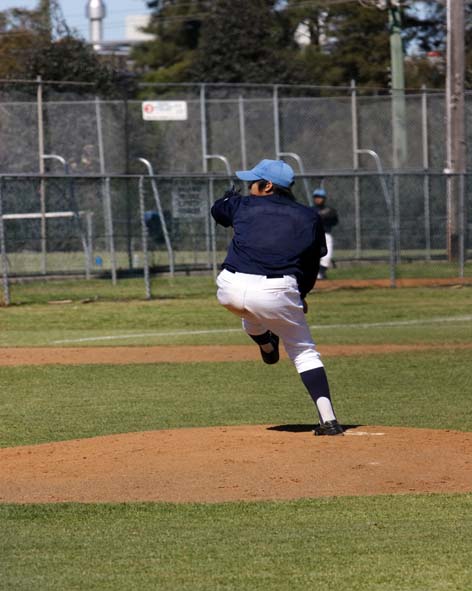
The pitcher's mental challenge is the opposite of the batter's in one critical respect - they initiate the action rather than react to it, which means the opportunity for the anxious mind to interfere with the delivery mechanics is theoretically unlimited in the time between the decision to throw and the release. The pitcher who can maintain the transition from deliberate preparation (reading the catcher's sign, selecting the pitch, setting the grip) to committed, fully subconscious execution (the delivery itself) without the intrusive conscious monitoring that unravels mechanics is performing one of the most demanding mental tasks in baseball. The ones who cannot - who think about their mechanics during the delivery - are experiencing in real time the overthinking that turns a fluid, trained movement into the laboured production of a body under conscious surveillance.
The At-Bat Reset - Failure Management Across a Season
Baseball's endemic failure rate makes the between-at-bat mental reset the most consistently practised and most consequential mental skill in the game. The hitter who goes 0-for-4 and arrives at the following day's leadoff at-bat carrying none of the previous day's outcomes - who has genuinely reset to the neutral, present-focused state from which their best hitting occurs - produces a different season from the hitter who carries the weight of every poor at-bat into the next one. This reset is not achieved through positive thinking. It is achieved through the practiced, subconsciously installed between-performance routine that processes and releases each at-bat before the next one begins.
The Statistics - Living Under Constant Quantified Scrutiny
Baseball's statistical culture is both one of the sport's defining features and one of its most significant mental game challenges. Every at-bat updates a batting average that is visible to the player, the coaches, the scouts, and the fans simultaneously. Every pitching appearance adds to an ERA that is the most transparent performance measure in professional sport. Living under this level of quantified public scrutiny - particularly during a slump when the numbers are moving in the wrong direction and the visibility of the decline is itself an additional pressure - requires a mental game that can maintain process focus in the face of outcome visibility that most sports do not impose.
Yips and Mechanics Disruption
Baseball has its own version of the yips - the throwing yips that have ended careers, the mechanical disruptions in pitching that appear under game pressure and disappear in the bullpen, the second-base throw anxiety that plagues catchers who can throw from home to second with perfect accuracy in warm-ups. These are not technical problems. They are the same conditioned motor disruption that golf's yips represent - a subconscious protection program that has learned to interfere with a specific, high-stakes movement execution - and they respond to the same subconscious intervention that golf's yips do, not to the mechanical tinkering that most coaches instinctively apply.
The Batting Slump - Baseball's Most Studied Mental Pattern
The batting slump is baseball's most discussed and most mismanaged mental phenomenon. More swings in the cage. Video analysis of mechanics. Adjustments to stance and approach. These are the standard interventions - and they are all operating at the conscious level of a problem that is running subconsciously. The slump is the anxiety-performance feedback loop described in detail in the companion article on slumps, and it responds to subconscious resolution rather than technical adjustment. The hitter who breaks a slump by changing their stance has usually resolved it despite the mechanical change rather than because of it - by restoring process focus and reducing the conscious monitoring that was degrading performance.
Clutch Performance - Coming Through When It Counts
Baseball's statistical longevity has enabled the most thorough examination of clutch performance in sport - and the data is consistent: a minority of players genuinely perform better in high-leverage situations than their overall statistics would predict, while a larger group performs measurably worse. The difference is not physical. Players with equivalent physical ability and equivalent overall statistics diverge significantly in high-leverage situations based on the subconscious programs that either treat elevated stakes as a performance amplifier or as a threat that triggers the degradation cycle. This clutch capacity is not distributed randomly by personality. It is built - through the specific subconscious work that installs elevated stakes as a performance context rather than a threat context.
The Long Season - Mental Resilience Across 162 Games
The 162-game Major League season is a mental endurance test unlike that of any other major professional sport. The physical demand is significant but manageable. The mental demand - maintaining process focus, competitive motivation, and emotional regulation across six months of daily games that include stretches of poor results, physical discomfort, and the cumulative weight of a schedule that allows almost no recovery from poor performances before the next one is required - is genuinely extraordinary. The player whose mental architecture can sustain composure, routine, and genuine engagement across this volume of performance produces a dramatically different season from the equally talented player whose mental game cannot sustain it past August.
The Five-Stage Mental Training Protocol for Baseball Players
Build the Position-Specific Performance Blueprint
Effective baseball Visualization is built around the specific performance scenarios that each position most demands - and the ones that are most mentally challenging are the ones that require the most deliberate rehearsal. The hitter rehearses the at-bat in the specific count situations that most concentrate anxiety - 0-2 with runners in scoring position, the leadoff at-bat after a four-strikeout game - experiencing the pitch selection, the recognition, the decision, and the contact with complete subconscious automaticity rather than conscious deliberation. The pitcher rehearses the full-count delivery with the bases loaded, the mound visit after back-to-back walks, the first-pitch strike in the sequence following a home run allowed. The catcher rehearses the throw to second from the crouch, the block in the dirt, the management of the pitching staff through a long game. Each scenario rehearsed in the hypnotic state builds the subconscious familiarity that composure under pressure requires.
Install the Between-At-Bat Reset as an Automatic Protocol
The between-at-bat reset is baseball's most important and most consistently underused mental performance tool - the deliberate, practiced sequence that processes and releases each at-bat before the dugout bench has been reached, so that the next trip to the plate begins from the neutral, process-focused baseline rather than from the accumulated weight of previous outcomes. This reset protocol needs to be practiced in every at-bat of every training game until its execution is as automatic as any other trained baseball movement - because under the fatigue and accumulated pressure of a long season, effortful mental routines erode while practiced automatic ones remain. The specific sequence - a physical anchor, a breath pattern, a single release cue, and the specific attentional redirection to the next at-bat's process - takes seconds to execute and changes the season's statistical trajectory over hundreds of at-bats.
Resolve the Anxiety Programs Behind Yips, Slumps, and Mechanics Disruption
The throwing yips, the batting slump, the mechanical disruption that appears under game conditions - each has a specific subconscious origin, a specific anxiety-performance association that was installed through a specific experience and has been maintained ever since. In the hypnotic state, the origin of each is accessible and resolvable. The first throwing incident that installed the anxiety that became the yips. The specific sequence of at-bats that initiated the current slump's feedback loop. The game situation that first produced the mechanical disruption that has since become an anticipatory pattern. Resolving the emotional charge of these origins at the subconscious level removes the fuel from the programs they are maintaining - not by rewriting history but by completing the emotional processing that was interrupted at the time and has been running as an active program ever since.
Build the Pre-Game and Pre-At-Bat Routines That Create Performance State
The rituals and routines that baseball players are famous for are not superstition - they are, at their most effective, state-creation sequences that use conditioned association to reliably produce the specific neurological state associated with best performance. The value of a pre-at-bat routine is not in its specific components but in its consistency - the same physical and mental preparation sequence preceding every at-bat associates those components with the performance state the player wants to access, so that executing the routine activates the state rather than requiring the state to be separately summoned. Building this routine deliberately - identifying the specific physical and mental preparation elements that consistently precede best at-bats and systematising them into a consistent sequence - is one of the most straightforward and highest-leverage mental game investments a baseball player can make.
Install the Baseball Identity That Performs Across 162 Games
The deepest performance variable is the subconscious identity of the baseball player - whether they carry, below conscious thought, the identity of someone who is a clutch performer, who maintains their approach through slumps, who produces in the big moments across a full season rather than in favourable stretches interrupted by extended poor periods. This identity is not built by posting good statistics in good months. It is installed through the subconscious work that encodes being an effective, resilient, consistent performer as a stable feature of the player's self-concept - available to the homeostatic mechanism that maintains identity-consistent performance as the target it then works to reach and sustain across the full length of the season.
⚠️ Softball players - everything here applies to you: The mental game demands of softball parallel baseball's closely - the at-bat reset, the pitching mental game, the slump management, the clutch performance variable, and the yips in throwing and pitching are all present in softball with the same neurological architecture and the same responsiveness to subconscious mental training. The primary differences are in the specific scenarios that most require deliberate rehearsal - the faster pitch speed in fastpitch softball, the different game structure, and the team dynamics that differ from baseball - but the mental training principles and protocols are identical. Everything in this article applies directly to the softball player's preparation.
- The routine is the mental game made visible. The elaborate pre-at-bat rituals of professional hitters, the consistent between-pitch sequences of elite pitchers, the precise warm-up structure of position players - these are not quirks of obsessive personality. They are the physical expression of mental game architecture - the state-creation sequences and attention-anchoring tools that consistent performers have discovered, usually through trial and error across years of competition, work for them. Deliberate mental training compresses this discovery process significantly by building the specific sequences and anchors with conscious intention rather than waiting for them to emerge accidentally from enough at-bats.
- The mental game compound interest effect across a 162-game season is enormous. A single at-bat mental game improvement of 5% - a small improvement in reset quality, a marginal reduction in outcome focus, a slightly faster recovery from the previous at-bat's outcome - multiplied across 500 at-bats in a season is a 25-at-bat improvement in quality. At a .280 batting average, 25 additional quality at-bats represents approximately seven additional hits - the difference between a .280 and a .294 season. For a professional player, that difference is measured in millions of dollars in contract value. The mental game's compound interest across a long season dwarfs what any single physical or technical adjustment can produce.
- The pitching mound is one of sport's most psychologically exposed performance environments. The pitcher stands alone, is individually responsible for the outcome of every pitch, and performs under the scrutiny of 40,000 people and every coaching decision-maker in the organisation simultaneously. The emotional management required to maintain composure through a shaky inning, through the crowd's reaction to a home run allowed, through the pitching coach's mound visit that both supports and increases the awareness of difficulty - this is a mental game skill of the highest order, and it is one that is developed with the same deliberate training attention as the physical mechanics that produce the pitches themselves.
- Youth baseball is where most mental game patterns are installed - for better or worse. The young player whose coach responds to strikeouts with consistent encouragement and technical guidance, who models the between-at-bat reset through their own composed sideline behaviour, and who builds a team culture in which the failure rate of baseball is normalised and processed healthily is installing mental game patterns that will serve the player throughout their career. The coach who responds to strikeouts with frustration, who focuses predominantly on the outcome rather than the process, and who treats the failure that is mathematically inevitable in baseball as a performance problem is installing anxiety-performance associations that the player will carry into every high-stakes at-bat for years.
🎉 Free Download: Begin the Mental Training Your Baseball Deserves
The 12 Minute Relaxation MP3 opens the subconscious access state from which the at-bat blueprint, the anxiety resolution, and the baseball identity installation that constitute genuine mental training are most directly accessible. Use it as the foundation of your daily mental training practice - the platform from which your performance across 162 games is built at the level where it actually matters.
⬇ Download Free MP3Also free: Belief & Visualization Guide

⚾ Ready to Build the Mental Game Your Baseball Ability Deserves?
🧠 The Baseball Mental Training Program - which also covers batting, pitching, softball, and a combined batting and pitching pack - works directly at the subconscious level where the slump loop, the yips, the clutch performance variable, and the baseball identity that sustains performance across a full season are encoded.
🧠 For a program built specifically around your position, your current mental game challenges, and the particular subconscious programs that your performance history has revealed: personalized sports recordings deliver the most precisely targeted mental training available.
📚 Related Articles
Baseball Mental Training Program
Covers batting, pitching, softball, and combined packs - built for the specific mental demands of your position.

Dealing With a Slump
The neurological architecture of baseball's most discussed and most mismanaged mental phenomenon - and how to break out.

The Yips
The conditioned motor disruption that affects baseball throwers and pitchers - what it actually is and how it is resolved.

Consistency Under Pressure
Clutch performance - why some players consistently come through in high-leverage situations and how to build that capacity.
