



Somewhere along the way most people absorbed the idea that happiness is something that arrives when the conditions are right. When the relationship is good, the finances are sorted, the health is solid, the career is where it should be. Happiness as destination - a state you reach when enough things fall into place.
But the neuroscience tells a different story. Happiness isn't a destination and it isn't a personality trait you either have or you don't. It's a pattern of brain activity - and like any pattern, it can be trained.
Your Brain Has a Happiness Baseline
Research in positive psychology has identified what's known as a hedonic baseline - a default level of wellbeing that your brain returns to after positive or negative events. Win the lottery or survive a serious illness, and within a relatively short period most people return to roughly where they started emotionally. The circumstances changed dramatically. The baseline didn't.
This baseline is partly genetic, but it's also significantly shaped by habitual patterns of thought, attention, and behaviour. And because the brain is neuroplastic - constantly reshaping itself in response to repeated experience - that baseline can be shifted over time through consistent practice.
You may not be able to choose what happens to you. But you have more influence over your brain's default emotional setting than most people realise.
Why Happiness Has to Be Practised
Your brain's negativity bias - its evolutionary tendency to weight negative experiences more heavily than positive ones - means that positive states don't register and consolidate the way negative ones do. A difficult interaction can colour your mood for hours. A genuinely good moment often passes without leaving much of a trace.
This isn't a character flaw. It's a survival mechanism that served your ancestors well and serves you poorly in modern life. But knowing it's there means you can compensate for it deliberately - by actively pausing in positive moments long enough for them to register, by directing attention toward what's working rather than what isn't, and by building daily practices that repeatedly activate the neural circuits associated with wellbeing.
Repetition is the key word. The brain changes through what you do consistently, not occasionally. A single good day doesn't shift the baseline. A daily practice, sustained over weeks and months, does.
The Neuroscience of Positive Habits
Several daily practices have been consistently shown in research to shift brain activity in the direction of greater wellbeing - not as a placebo effect, but through measurable neurochemical and structural changes.
Gratitude practice activates the medial prefrontal cortex and triggers dopamine and serotonin release. Physical movement increases BDNF - brain-derived neurotrophic factor - which supports neuroplasticity and is strongly associated with mood regulation. Meditation thickens the prefrontal cortex over time and reduces amygdala reactivity, meaning less emotional volatility and greater capacity for calm. Social connection activates the brain's reward circuitry in ways that solitude simply doesn't replicate.
None of these are complicated. All of them require consistency. And all of them work at the level of the subconscious over time - gradually shifting what your brain does automatically, without requiring conscious effort to maintain.
The Subconscious and Your Emotional Default
Your emotional baseline isn't set consciously. It's maintained by the subconscious - by the beliefs, associations, and habitual thought patterns that run below the surface of awareness and colour your experience of each day before you've made a single conscious choice.
If your subconscious carries beliefs like nothing ever really works out for me, or I have to earn the right to feel good, or happiness is for other people - those beliefs will filter your experience regardless of your circumstances. You can have everything you wanted and still feel a persistent low-level flatness, because the subconscious is filtering out the evidence that contradicts its established view.
This is why happiness habits that stay at the behavioural level - the gratitude journal filled in mechanically, the meditation done while mentally elsewhere - tend to produce limited results. The practice needs to reach the subconscious to shift the baseline. It needs to be felt, not just performed.
Training the Brain Through Felt Experience
The subconscious learns through repetition and emotion. What you repeatedly feel with genuine engagement becomes the new normal - the state your brain begins to treat as familiar and therefore seeks to recreate.
This means the most effective happiness practices are the ones that generate a genuine felt shift, however brief. Not performing gratitude but actually pausing and letting appreciation move through you. Not going through the motions of meditation but genuinely arriving in the present moment, even for thirty seconds. Not forcing positive thinking but directing attention with enough care and consistency that the brain begins to do it automatically.
Hypnosis and deep subconscious work accelerate this process significantly, because they allow new emotional associations to be formed at the level where the baseline is actually set. A subconscious that has genuinely experienced - not just been told about - states of calm, contentment, and ease begins to treat those states as home. And what feels like home is what the brain naturally returns to.
Small Practices, Compounding Returns
You don't need a dramatic life overhaul to shift your happiness baseline. You need small practices done with genuine presence, repeated daily over time. The compound effect of consistent small inputs on the brain is well documented - and it works in both directions. Consistent small inputs of negativity, rumination, and self-criticism gradually lower the baseline. Consistent small inputs of appreciation, connection, movement, and presence gradually raise it.
The choice about which direction to train isn't always easy. Old patterns have momentum, and the negativity bias has a head start. But the brain's capacity to change doesn't expire. It's available at any age, at any starting point, regardless of how long the current patterns have been running.
Happiness Is Not the Absence of Difficulty
Training your brain toward happiness doesn't mean engineering a life without pain, loss, or challenge. Those are part of being human and no amount of neuroplasticity changes that. What changes is your brain's capacity to return - to find its way back to equanimity after difficulty, more quickly and more reliably than before.
That capacity is what genuine happiness actually looks like. Not a permanent high. Not the absence of hard days. But a brain that knows the way home - and gets better at finding it the more you practise.

🔒 Related Products
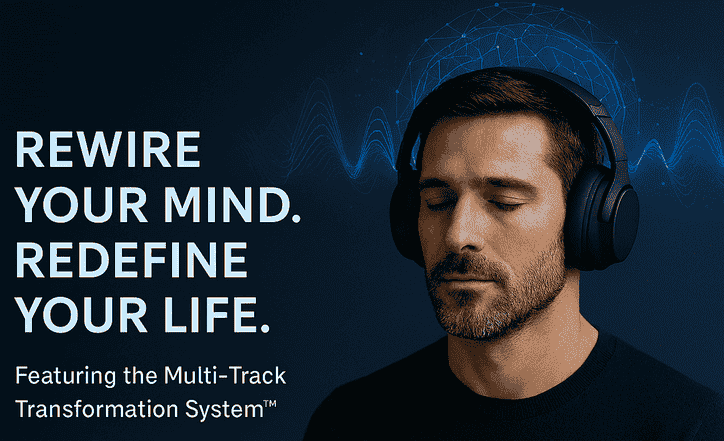
All our programs use theta brainwave frequencies and binaural beats to guide your mind into the deeply receptive state where subconscious change actually occurs - the same state reached by experienced meditators, and the level at which hypnotic suggestion produces its most lasting results. Simply listen with headphones, relax, and let the recordings do the work.
🧠 Most Specific Product
The Confidence / Self Esteem Hypnosis Program works directly at the deepest subconscious level to bring about positive changes from the inside, out - which can bring a wide and ongoing range of benefits to your everyday life.
🧘 Another Powerful Program
🧠 The Freedom from Anxiety Program contains a powerful 4-track hypnosis program designed to alleviate anxiety, stress and overwhelm at the subconscious source, by providing hypnotic tracks which can be safely used at various times throughout the day.
The Deep Meditation Program allows you to access the deepest levels of relaxation to allow inner peace and mental clarity to flow through every area of your life.
🎯 Need Something More Personalized?
While our pre-made programs are effective for most people, sometimes you need something tailored specifically to your unique situation. Our Custom Hypnosis Recordings are personally designed for you, giving you the flexibility to target your specific goals and challenges through carefully engineered layered audio tracks, theta brainwave entrainment, binaural beats, and NeuroFrequency Programming™ - to guide the mind into deeply relaxed, highly receptive states where positive subconscious changes occur more naturally.
🎯 New to Relaxation / Self-Hypnosis?
Our complementary 12 Minute Relaxation provides a guided recording perfect for starting out, or for anyone wanting quick light relaxation. More free downloads also on this page, for sleep etc.

🎧 Recommended Products for This Topic

Confidence & Self Esteem
Strengthen yourself from within to build confidence, self esteem, resilience, and a positive self image.

Freedom from Anxiety
Dissolve stress, worry and overwhelm at the deepest subconscious level with this powerful 4-track hypnosis system.

Deep Meditation Program
Access the deepest levels of relaxation to bring inner peace into every area of your life.

Sleep / Insomnia
Drift into a deep satisfying night of sleep, with our subliminal recording of beautiful relaxation music which synchronizes brain waves.

Wealth & Abundance
Create an automatic mindset of prosperity-consciousness to open your world to abundance, opportunities and success.

Deep Focus & Concentration Program
5-track subconscious system designed to build deep work states, concentration, and sustained mental clarity for high-performance focus.
Online Shop
See our entire selection of powerful hypnotic self help products