
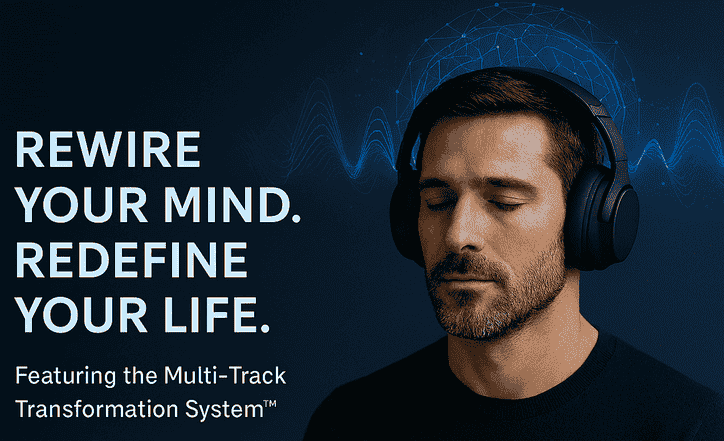



You did the research. You studied the charts, back-tested your strategy, watched the setups form exactly the way they were supposed to. And then, in the moment that actually mattered, something happened. You held on too long. You jumped in too early. You doubled down when every rational part of you knew you should have walked away.
And afterwards, sitting with the loss, you could see it so clearly. The right move had been obvious. So why did you not take it?
This is the question that separates the traders who eventually make it from the ones who keep starting over. And the answer has very little to do with strategy, indicators, or market knowledge. It has everything to do with what was happening inside your mind in that moment - specifically, inside your subconscious.
The Market Does Not Blow Accounts. Minds Do.
Walk into any trading forum and you will find thousands of people with solid strategies who are still losing money. The strategies work - in back-testing, in theory, on paper. But the moment real money is on the line, something shifts. Decisions that seemed clear in a demo account become agonizing. Rules that felt easy to follow get bent, then broken.
This is not a knowledge problem. Most blown accounts are not the result of bad analysis. They are the result of good analysis being overridden by emotion.
"Fear, greed, hope, and ego are not personality flaws in traders. They are subconscious programs running in real time - and they are faster than your conscious mind by a significant margin."
By the time your rational mind has formed an opinion about a trade, your subconscious has already reacted. Already felt the pull of potential gain. Already flinched at the possibility of loss. Already started constructing a justification for whatever it has already decided to do.
The Two Emotions That Wreck More Accounts Than Any Market Move
Fear and greed are talked about constantly in trading circles, usually as if they are character weaknesses to be ashamed of and pushed through. But they are not weaknesses. They are deeply wired subconscious survival responses - and understanding them changes how you approach the whole problem.
Fear in trading shows up in several ways:
- Closing profitable trades too early because you are terrified of giving the gain back
- Hesitating on valid setups because the last few trades went badly
- Reducing position size so dramatically after a loss that winning trades barely recover the damage
- Sitting on the sidelines during perfect conditions because the anxiety of being wrong feels unbearable
Greed does the opposite:
- Holding winners past your target because you are convinced this one will run forever
- Adding to losing positions to average down, turning a manageable loss into a catastrophic one
- Trading outside your plan because the market feels like it owes you after a bad week
- Chasing entries you missed, taking worse prices just to be in the move
Neither of these is stupidity. Both are your subconscious responding to perceived threat and reward in the only way it knows how - the same way it would respond to any high-stakes survival situation. The market just happens to be a uniquely perfect trigger for both responses simultaneously.
Why Trading Psychology Advice Often Falls Short
There is no shortage of advice about trading psychology. Keep a journal. Stick to your rules. Step away from the screen after a loss. Meditate. These are all reasonable suggestions, and some of them help - at the edges.
But here is the limitation: all of that advice operates at the conscious level. And your conscious mind is not the one pulling the trigger on emotional trades. Your subconscious is. And your subconscious is not reading your trading journal.
The gap between knowing what you should do and actually doing it under pressure is not a discipline gap. It is a subconscious gap. Your conscious trading rules are sitting in one part of your mind, while your subconscious fear and reward wiring is sitting in a much deeper, much older, much faster part. And when those two things conflict in a live trade, the older system wins.
"You already know your rules. The problem has never been knowing your rules. The problem is the part of your mind that ignores them when real money is on the line."
What the Best Traders Have in Common
Spend time studying consistently profitable traders and a pattern emerges that has nothing to do with a superior strategy or a better data feed. What they have, almost universally, is a particular relationship with risk, loss, and uncertainty.
They do not enjoy losses. But losses do not destabilize them. They do not feel the same visceral urgency around a trade that most retail traders feel. They have developed - whether consciously or through years of experience - a mental and emotional baseline that allows them to execute their plan with a level of detachment that most traders simply cannot access.
- They are not more disciplined - they are less emotionally reactive
- They do not suppress fear and greed - those responses have genuinely quieted at the subconscious level
- They do not force calm - they operate from a baseline that is already calm
That baseline is not a personality trait you either have or you do not. It is a subconscious state. And subconscious states can be deliberately trained.
Getting Into the Zone - And Staying There
Every trader has experienced at least one session where everything just clicked. The mind was quiet, the decisions were clear, entries and exits felt almost effortless. Traders call it being in the zone. Athletes call it flow. What it actually is, is a state where the subconscious fear and reward noise has dropped below the threshold where it interferes with clear decision making.
The goal of serious trading psychology work is not to eliminate emotion. It is to drop the baseline emotional noise low enough that your trained strategy can run cleanly.
Hypnosis is one of the most direct ways to achieve this - not as a mystical shortcut, but as a practical tool for accessing and reprogramming the subconscious responses that are currently overriding your rational trading mind. Working at the theta level, where the subconscious is most receptive, you can begin to genuinely rewire the fear and greed responses that have been sabotaging your performance.
Not by suppressing them. By replacing the underlying subconscious programming with something that actually serves your trading - mental clarity, calm under pressure, emotional detachment from individual trade outcomes, and the deep internal discipline that your conscious rules have never quite been able to enforce on their own.
Your Strategy Is Probably Fine. Your Mind Needs the Work.
If you have been through multiple strategies and keep arriving at the same painful outcomes, it is worth considering that the variable across all of those experiences has not been the strategy. It has been the mind running it.
The good news is that the mind is trainable. The subconscious patterns driving your worst trading decisions are not fixed. They were formed through experience and repetition, which means they can be reformed the same way - with the right kind of work, at the right level.
Your edge in the market may already exist in your analysis. What you are building now is the mental infrastructure to actually use it.
 💼 Forex FX Traders Hypnosis Program
Train your mind to trade at its best - with increased mental clarity, calm under pressure, and the subconscious discipline to follow your strategy when it matters most.
Learn more about the Forex Traders Program →
🧠 The Freedom from Anxiety Program contains a powerful 4-track hypnosis program designed to alleviate anxiety, stress and overwhelm at the subconscious source, by providing hypnotic tracks which can be safely used at various times throughout the day.
The Freedom from Anxiety Program dissolves stress, worry and overwhelm at the deepest subconscious level with a powerful 4-track hypnosis system.
The Deep Focus & Concentration Program is a 5-track subconscious system designed to build deep work states, concentration, and sustained mental clarity for high-performance focus.
🎯 Need Something More Personalized?
While our pre-made programs are effective for most people, sometimes you need something tailored specifically to your unique situation. Our Custom Hypnosis Recordings are personally designed for you, giving you the flexibility to target your specific goals and challenges through carefully engineered layered audio tracks, theta brainwave entrainment, binaural beats, and NeuroFrequency Programming™ - to guide the mind into deeply relaxed, highly receptive states where positive subconscious changes occur more naturally.
🎯 New to Relaxation / Self-Hypnosis?
Our complementary 12 Minute Relaxation provides a guided recording perfect for starting out, or for anyone wanting quick light relaxation. More free downloads also on this page, for sleep etc.

🎧 Recommended Products for This Topic
Strengthen Forex FX Trading
Eliminate hesitation, sharpen decision-making under pressure, and develop a calm, disciplined trading mindset with powerful subconscious reprogramming.

Entrepreneur Mind
Develop characteristics, mindsets, attitudes, behaviors and instincts of a successful entrepreneur.

Freedom from Anxiety
Dissolve stress, worry and overwhelm at the deepest subconscious level with this powerful 4-track hypnosis system.

Wealth & Abundance
Create an automatic mindset of prosperity-consciousness to open your world to abundance, opportunities and success.

Deep Focus & Concentration Program
5-track subconscious system designed to build deep work states, concentration, and sustained mental clarity for high-performance focus.
Online Shop
See our entire selection of powerful hypnotic self help products